Backyard Putting Greens: What to Know Before You Build
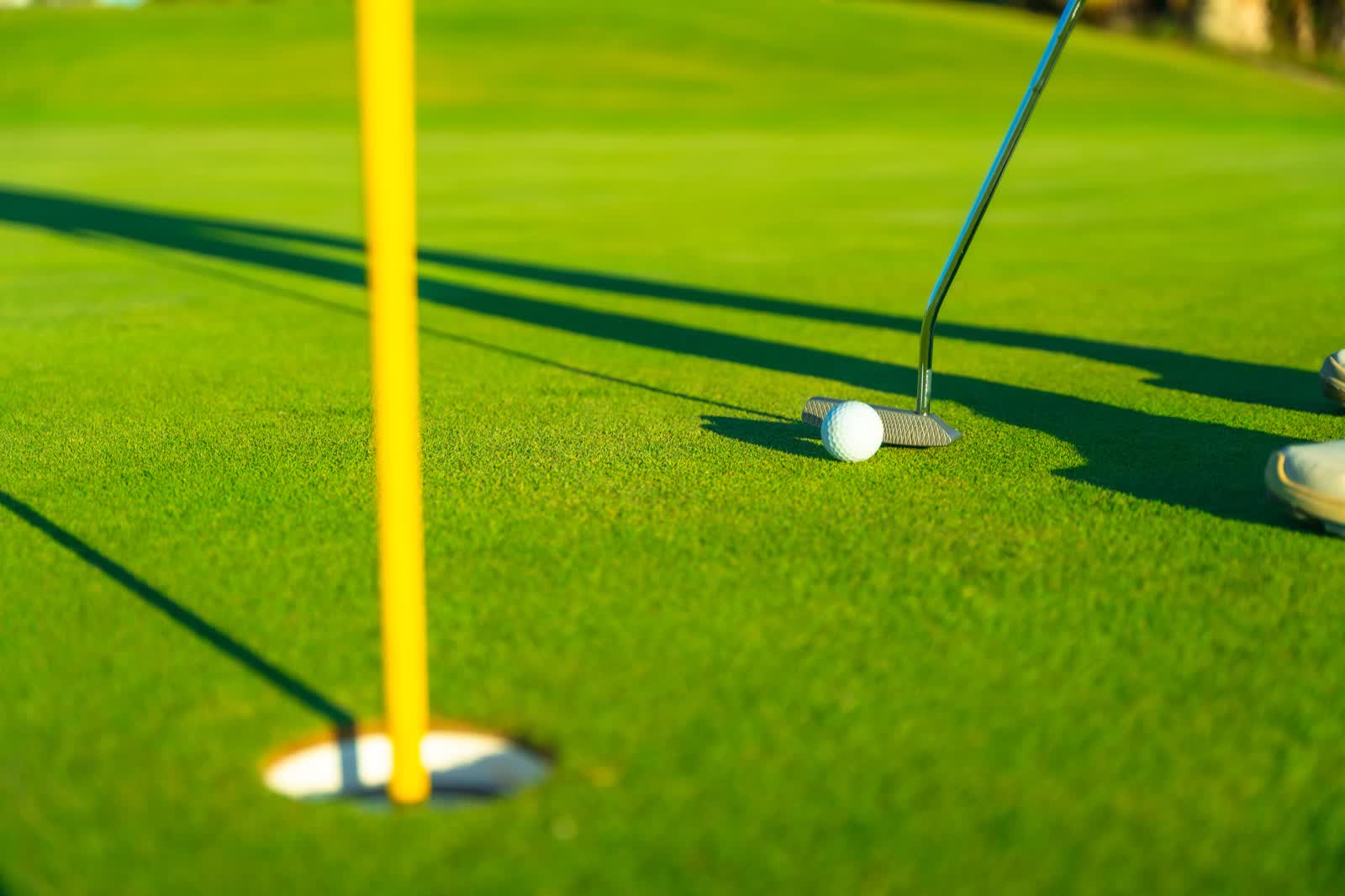
A home putting green is the most-used thing we build, and Portland's compressed golf season is exactly why. Here's what's worth deciding before design starts.
How Much Space You Actually Need
Less than most people assume. Around 200 square feet supports a single cup with several genuinely different approach angles. Four to six hundred gets you two or three cups with real variety. Beyond that you're into multi-hole layouts with chipping approaches. Odd shapes work fine. We've built good greens into narrow side yards and awkward corners, and irregular outlines often look more natural than a tidy oval.
Green Speed
Measured on the stimpmeter, and we build to order, typically between 8 and 11. Nine to ten feels like a well-kept course green and suits most players. Faster isn't automatically better: a very quick green with pronounced break becomes punishing rather than useful for practice. Speed comes primarily from infill depth, so it can be adjusted later if you want to change it.
How Much Break
The most under-considered decision. Some contour makes practice far more valuable than a flat surface. You learn to read putts rather than just stroke them. Too much makes half your green unusable. We generally recommend meaningful but moderate contouring, with at least one relatively flat section for straight-putt work on stroke mechanics.
Chipping
If you want to chip into it, say so at design time. It affects the turf specification, and it usually means adding a fringe collar of longer turf to catch and slow shots the way a real fringe does. It may also affect placement. You need somewhere sensible to chip from.
Where to Put It
Consider sun and shade, sight lines from the house, drainage, and what's downrange of a mishit. Deep shade under conifers means more debris and more blowing off. Adjacent to a patio is popular for good reason.
Cost
Putting greens run higher per square foot than landscape lawns, the base work is far more precise, the nylon surface costs more, and contouring is labor-intensive. They're also smaller, so total project cost is often lower than people expect.
Maintenance
Blow debris off, brush periodically, top up infill every few seasons. Nothing else.
Design Yours
Contact us for a free design consultation and we'll sketch a layout that fits your yard and the way you actually practice.

Oregon Artificial Turf
Portland's artificial turf installation specialists. Synthetic grass lawns, pet turf, putting greens, and playground surfacing for homeowners and businesses across the Portland, Oregon metro area.
Planning a backyard putting greens project?
Get a free on-site consultation and estimate from the Portland area's artificial turf specialists.